Buy 1c2.eu ?
We are moving the project
1c2.eu .
Are you interested in purchasing the domain
1c2.eu ?
domain@kv-gmbh.de · 0541-91531010
Buy 1c2.eu ?
What is the fractionation method?
Fractionation is a separation process used in various industries to separate a mixture into its individual components based on their different boiling points. This method involves heating the mixture to a specific temperature, causing the components with lower boiling points to vaporize and rise to the top of the fractionating column, while the components with higher boiling points remain in liquid form. The vaporized components are then condensed back into liquid form and collected as separate fractions. This process allows for the isolation of pure components from a complex mixture. **
Is the fractionation method the same as the separation method?
The fractionation method is a type of separation method. Fractionation involves separating a mixture into its individual components based on their different physical or chemical properties, such as boiling point, solubility, or molecular size. This process results in the formation of fractions, which are the individual components of the mixture. Therefore, while fractionation is a type of separation method, not all separation methods involve fractionation. **
Similar search terms for Fractionation
Top-Angebote
Products related to Fractionation:
-
Uplifted Finds Avian Mimic Enrichment Inventory (9 Unit Hub) Avian Mimic Enrichment Inventory (9 Unit Hub)Optimize your pet's physical agility and predatory tracking with the AvianMimic Enrichment Inventory, a professionalgrade interactive system engineered with highfrequency kinetic logic. This highutility 9piece replacement hub features a specialized...40,97 $*Shipping: 0,00 $Secure redirect to the provider
-
APC Network Management Card 3 Remote Management AdapterA plug-in remote management adapter for APC UPS systems with integrated PowerChute Network Shutdown and environmental monitoring capabilities. Supports network connectivity up to 1 Gbps across 10Base-T, 100Base-TX, and 1000Base-T Ethernet protocols using TCP/IP and SMTP. Designed for compatibility with multiple APC Smart-UPS and Symmetra models.577,99 £*Shipping: 0,00 £Secure redirect to the provider
-
Simon & Schuster Money: A Story of Humanity by David McWilliams Economic History & Global Finance ExplainedIn Money: A Story of Humanity, renowned economist David McWilliams explores the fascinating history of money — not just as currency, but as a powerful force that has shaped human civilisation, relationships, technology, and global society. From ancient barter systems to cryptocurrency revolutions, McWilliams reveals how money reflects our values, ambitions, fears, politics, and culture.Rich with storytelling, sharp insights, and humour, this book makes complex economic ideas accessible, engaging, and deeply human. Perfect for readers who enjoy exploring how history, psychology, markets, and power intersect, Money: A Story of Humanity provides a fresh, eye-opening look at how money drives — and is driven by — human behaviour. Ideal for fans of Yuval Noah Harari, Tim Harford, Niall Ferguson, and Mary Beard.7,99 £*Shipping: 2,99 £Secure redirect to the provider
-
APC NetShelter Cable Management Arm AR8129Cable management arm designed for APC NetShelter and Smart-UPS enclosures, measuring 45.7 cm length with compact profile. Lightweight at 0.5 kg, compatible with 30+ APC equipment models. Includes 2-year warranty.177,49 £*Shipping: 0,00 £Secure redirect to the provider




-
What is a payroll accounting?
Payroll accounting is the process of recording and managing a company's financial transactions related to employee compensation. This includes calculating and recording wages, salaries, bonuses, and deductions, as well as managing payroll taxes and other withholdings. Payroll accounting also involves ensuring compliance with labor laws and regulations, and providing accurate financial reports related to employee compensation. Overall, payroll accounting is essential for maintaining accurate and transparent financial records related to employee compensation within an organization. **
-
Can you please help me with the isolation and fractionation of chloroplasts for photosynthesis?
Sure! Isolating and fractionating chloroplasts for photosynthesis involves several steps. First, you would need to extract chloroplasts from plant tissue using a buffer solution and a homogenizer. Then, you can use differential centrifugation to separate the chloroplasts from other cellular components based on their size and density. After that, you can use a sucrose density gradient to further purify and fractionate the chloroplasts based on their buoyant density. Finally, you can collect the chloroplast fractions and use them for studying photosynthesis. Keep in mind that this process requires careful handling and precise techniques to ensure the purity and functionality of the isolated chloroplasts. **
-
Should I take an accounting course or a payroll accounting course?
If you are interested in a broader understanding of accounting principles and practices, then taking an accounting course would be beneficial. However, if you are specifically interested in learning about the specialized area of payroll accounting, then a payroll accounting course would be more suitable. Consider your career goals and interests to determine which course would be the best fit for you. **
-
Can someone tell me the steps of cell fractionation by density gradient centrifugation with explanation?
Cell fractionation by density gradient centrifugation involves several steps: 1. Homogenization: The first step is to break open the cells and release their contents. This is typically done using a homogenizer or sonicator to disrupt the cell membranes. 2. Centrifugation: The homogenized cell suspension is then centrifuged at a low speed to remove large debris and unbroken cells. This step separates the homogenate into different fractions based on size and density. 3. Density gradient formation: A density gradient solution, such as sucrose or cesium chloride, is prepared and layered in a centrifuge tube. The gradient is formed by layering solutions of increasing density from the bottom to the top of the tube. 4. Centrifugation: The cell homogenate is then layered on top of the density gradient and centrifuged at high speeds. During centrifugation, the different cellular components separate based on their density and form distinct bands within the gradient. **

Can someone provide me with the steps of cell fractionation by density gradient centrifugation with explanation?
Cell fractionation by density gradient centrifugation involves separating cellular components based on their density. The steps are as follows: 1. Homogenize the cells to break them open and release their contents. 2. Centrifuge the homogenate at low speed to remove large debris and nuclei. 3. Layer the supernatant on top of a density gradient medium in a centrifuge tube. 4. Centrifuge the tube at high speed, causing cellular components to separate based on their density, with heavier components sinking to the bottom and lighter components staying towards the top. 5. Collect the fractions at different density levels and analyze them to isolate specific cellular components. This method allows for the separation of organelles and other cellular components based on their density, providing researchers with purified fractions for further analysis. **
Does the inventory in accounting not match the target inventory?
If the inventory in accounting does not match the target inventory, it could indicate potential issues such as theft, errors in recording transactions, or discrepancies in the physical counting of inventory. It is important to investigate the root cause of the discrepancy and take corrective actions to reconcile the inventory. This may involve conducting a physical inventory count, reviewing transaction records, and implementing better inventory management practices to prevent future discrepancies. Regular monitoring and reconciliation of inventory can help ensure accurate accounting records and prevent potential losses. **
Top-Angebote
Products related to Fractionation:
-
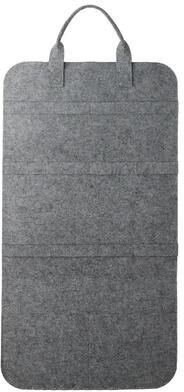
Uplifted Finds Vertical Toy Inventory Management Module grayOptimize your pets engagement ecosystem with the Vertical ToyInventory Module, a professionalgrade organization system engineered with spatialefficiency logic. This highutility module features a multitier felt architecture specifically designed to...92,97 $*Shipping: 0,00 $Secure redirect to the provider
-
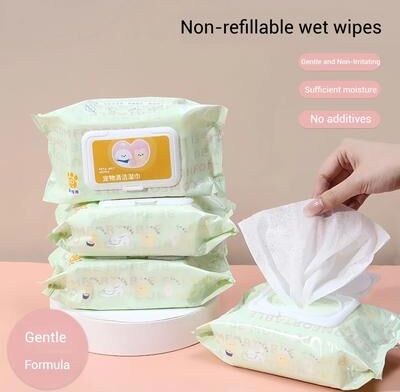
Uplifted Finds Epidermal Sanitization Inventory (3 Pack Hub) Epidermal Sanitization Inventory (3 Pack Hub)Optimize your pets dermatological hygiene and ocular clarity with the Epidermal Sanitization Inventory, a professionalgrade maintenance system engineered with aqueouscleansing logic. This highutility 240unit logistics package features a specialized...111,97 $*Shipping: 0,00 $Secure redirect to the provider
-
Uplifted Finds Avian Mimic Enrichment Inventory (9 Unit Hub) Avian Mimic Enrichment Inventory (9 Unit Hub)Optimize your pet's physical agility and predatory tracking with the AvianMimic Enrichment Inventory, a professionalgrade interactive system engineered with highfrequency kinetic logic. This highutility 9piece replacement hub features a specialized...40,97 $*Shipping: 0,00 $Secure redirect to the provider
-
APC Network Management Card 3 Remote Management AdapterA plug-in remote management adapter for APC UPS systems with integrated PowerChute Network Shutdown and environmental monitoring capabilities. Supports network connectivity up to 1 Gbps across 10Base-T, 100Base-TX, and 1000Base-T Ethernet protocols using TCP/IP and SMTP. Designed for compatibility with multiple APC Smart-UPS and Symmetra models.577,99 £*Shipping: 0,00 £Secure redirect to the provider
-
What is the fractionation method?
Fractionation is a separation process used in various industries to separate a mixture into its individual components based on their different boiling points. This method involves heating the mixture to a specific temperature, causing the components with lower boiling points to vaporize and rise to the top of the fractionating column, while the components with higher boiling points remain in liquid form. The vaporized components are then condensed back into liquid form and collected as separate fractions. This process allows for the isolation of pure components from a complex mixture. **
-
Is the fractionation method the same as the separation method?
The fractionation method is a type of separation method. Fractionation involves separating a mixture into its individual components based on their different physical or chemical properties, such as boiling point, solubility, or molecular size. This process results in the formation of fractions, which are the individual components of the mixture. Therefore, while fractionation is a type of separation method, not all separation methods involve fractionation. **
-
What is a payroll accounting?
Payroll accounting is the process of recording and managing a company's financial transactions related to employee compensation. This includes calculating and recording wages, salaries, bonuses, and deductions, as well as managing payroll taxes and other withholdings. Payroll accounting also involves ensuring compliance with labor laws and regulations, and providing accurate financial reports related to employee compensation. Overall, payroll accounting is essential for maintaining accurate and transparent financial records related to employee compensation within an organization. **
-
Can you please help me with the isolation and fractionation of chloroplasts for photosynthesis?
Sure! Isolating and fractionating chloroplasts for photosynthesis involves several steps. First, you would need to extract chloroplasts from plant tissue using a buffer solution and a homogenizer. Then, you can use differential centrifugation to separate the chloroplasts from other cellular components based on their size and density. After that, you can use a sucrose density gradient to further purify and fractionate the chloroplasts based on their buoyant density. Finally, you can collect the chloroplast fractions and use them for studying photosynthesis. Keep in mind that this process requires careful handling and precise techniques to ensure the purity and functionality of the isolated chloroplasts. **
Similar search terms for Fractionation
-
Simon & Schuster Money: A Story of Humanity by David McWilliams Economic History & Global Finance ExplainedIn Money: A Story of Humanity, renowned economist David McWilliams explores the fascinating history of money — not just as currency, but as a powerful force that has shaped human civilisation, relationships, technology, and global society. From ancient barter systems to cryptocurrency revolutions, McWilliams reveals how money reflects our values, ambitions, fears, politics, and culture.Rich with storytelling, sharp insights, and humour, this book makes complex economic ideas accessible, engaging, and deeply human. Perfect for readers who enjoy exploring how history, psychology, markets, and power intersect, Money: A Story of Humanity provides a fresh, eye-opening look at how money drives — and is driven by — human behaviour. Ideal for fans of Yuval Noah Harari, Tim Harford, Niall Ferguson, and Mary Beard.7,99 £*Shipping: 2,99 £Secure redirect to the provider
-
APC NetShelter Cable Management Arm AR8129Cable management arm designed for APC NetShelter and Smart-UPS enclosures, measuring 45.7 cm length with compact profile. Lightweight at 0.5 kg, compatible with 30+ APC equipment models. Includes 2-year warranty.177,49 £*Shipping: 0,00 £Secure redirect to the provider
-
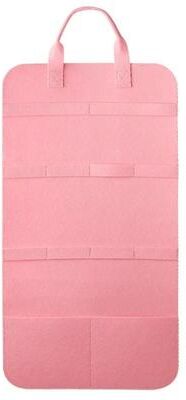
Uplifted Finds Vertical Toy Inventory Management Module pinkOptimize your pets engagement ecosystem with the Vertical ToyInventory Module, a professionalgrade organization system engineered with spatialefficiency logic. This highutility module features a multitier felt architecture specifically designed to...92,97 $*Shipping: 0,00 $Secure redirect to the provider
-
Uplifted Finds Vertical Toy Inventory Management Module yellowOptimize your pets engagement ecosystem with the Vertical ToyInventory Module, a professionalgrade organization system engineered with spatialefficiency logic. This highutility module features a multitier felt architecture specifically designed to...92,97 $*Shipping: 0,00 $Secure redirect to the provider
-
Should I take an accounting course or a payroll accounting course?
If you are interested in a broader understanding of accounting principles and practices, then taking an accounting course would be beneficial. However, if you are specifically interested in learning about the specialized area of payroll accounting, then a payroll accounting course would be more suitable. Consider your career goals and interests to determine which course would be the best fit for you. **
-
Can someone tell me the steps of cell fractionation by density gradient centrifugation with explanation?
Cell fractionation by density gradient centrifugation involves several steps: 1. Homogenization: The first step is to break open the cells and release their contents. This is typically done using a homogenizer or sonicator to disrupt the cell membranes. 2. Centrifugation: The homogenized cell suspension is then centrifuged at a low speed to remove large debris and unbroken cells. This step separates the homogenate into different fractions based on size and density. 3. Density gradient formation: A density gradient solution, such as sucrose or cesium chloride, is prepared and layered in a centrifuge tube. The gradient is formed by layering solutions of increasing density from the bottom to the top of the tube. 4. Centrifugation: The cell homogenate is then layered on top of the density gradient and centrifuged at high speeds. During centrifugation, the different cellular components separate based on their density and form distinct bands within the gradient. **
-
Can someone provide me with the steps of cell fractionation by density gradient centrifugation with explanation?
Cell fractionation by density gradient centrifugation involves separating cellular components based on their density. The steps are as follows: 1. Homogenize the cells to break them open and release their contents. 2. Centrifuge the homogenate at low speed to remove large debris and nuclei. 3. Layer the supernatant on top of a density gradient medium in a centrifuge tube. 4. Centrifuge the tube at high speed, causing cellular components to separate based on their density, with heavier components sinking to the bottom and lighter components staying towards the top. 5. Collect the fractions at different density levels and analyze them to isolate specific cellular components. This method allows for the separation of organelles and other cellular components based on their density, providing researchers with purified fractions for further analysis. **
-
Does the inventory in accounting not match the target inventory?
If the inventory in accounting does not match the target inventory, it could indicate potential issues such as theft, errors in recording transactions, or discrepancies in the physical counting of inventory. It is important to investigate the root cause of the discrepancy and take corrective actions to reconcile the inventory. This may involve conducting a physical inventory count, reviewing transaction records, and implementing better inventory management practices to prevent future discrepancies. Regular monitoring and reconciliation of inventory can help ensure accurate accounting records and prevent potential losses. **
* All prices are inclusive of VAT and, if applicable, plus shipping costs. The offer information is based on the details provided by the respective shop and is updated through automated processes. Real-time updates do not occur, so deviations can occur in individual cases. ** Note: Parts of this content were created by AI.