Buy 1c2.eu ?
We are moving the project
1c2.eu .
Are you interested in purchasing the domain
1c2.eu ?
domain@kv-gmbh.de · 0541-91531010
Buy 1c2.eu ?
What are accounts in accounting?
In accounting, accounts are used to record and track the financial activities of a business. They are used to categorize and summarize the various transactions that occur within the business, such as sales, expenses, assets, and liabilities. Each account represents a specific aspect of the business's financial position and performance, and they are organized into a chart of accounts to provide a systematic way of recording and reporting financial information. Accounts are essential for preparing financial statements and analyzing the financial health of a business. **
Why do we reconcile accounts in accounting?
We reconcile accounts in accounting to ensure that the financial records are accurate and complete. By comparing the balances in the company's records with external sources such as bank statements or supplier invoices, we can identify and correct any discrepancies or errors. This process helps to maintain the integrity of the financial information and provides assurance that the company's financial statements reflect the true financial position. Additionally, reconciling accounts helps to detect and prevent fraud or unauthorized transactions. **

Similar search terms for Accounts
Top-Angebote
Products related to Accounts:
-
Uplifted Finds Epidermal Sanitization Inventory (3 Pack Hub) Epidermal Sanitization Inventory (3 Pack Hub)Optimize your pets dermatological hygiene and ocular clarity with the Epidermal Sanitization Inventory, a professionalgrade maintenance system engineered with aqueouscleansing logic. This highutility 240unit logistics package features a specialized...111,97 $*Shipping: 0,00 $Secure redirect to the provider
-
Uplifted Finds Avian Mimic Enrichment Inventory (9 Unit Hub) Avian Mimic Enrichment Inventory (9 Unit Hub)Optimize your pet's physical agility and predatory tracking with the AvianMimic Enrichment Inventory, a professionalgrade interactive system engineered with highfrequency kinetic logic. This highutility 9piece replacement hub features a specialized...40,97 $*Shipping: 0,00 $Secure redirect to the provider
-
APC Network Management Card 3 Remote Management AdapterA plug-in remote management adapter for APC UPS systems with integrated PowerChute Network Shutdown and environmental monitoring capabilities. Supports network connectivity up to 1 Gbps across 10Base-T, 100Base-TX, and 1000Base-T Ethernet protocols using TCP/IP and SMTP. Designed for compatibility with multiple APC Smart-UPS and Symmetra models.577,99 £*Shipping: 0,00 £Secure redirect to the provider
-
Simon & Schuster Money: A Story of Humanity by David McWilliams Economic History & Global Finance ExplainedIn Money: A Story of Humanity, renowned economist David McWilliams explores the fascinating history of money — not just as currency, but as a powerful force that has shaped human civilisation, relationships, technology, and global society. From ancient barter systems to cryptocurrency revolutions, McWilliams reveals how money reflects our values, ambitions, fears, politics, and culture.Rich with storytelling, sharp insights, and humour, this book makes complex economic ideas accessible, engaging, and deeply human. Perfect for readers who enjoy exploring how history, psychology, markets, and power intersect, Money: A Story of Humanity provides a fresh, eye-opening look at how money drives — and is driven by — human behaviour. Ideal for fans of Yuval Noah Harari, Tim Harford, Niall Ferguson, and Mary Beard.7,99 £*Shipping: 2,99 £Secure redirect to the provider




-
Gross or net amounts of inventory accounts?
When discussing inventory accounts, it is important to differentiate between gross and net amounts. Gross inventory refers to the total value of inventory without accounting for any deductions or adjustments. On the other hand, net inventory accounts for any deductions such as discounts, returns, or damaged goods, providing a more accurate representation of the actual value of inventory on hand. Both gross and net amounts of inventory accounts are essential for businesses to track and manage their inventory effectively. **
-
How does the accounting of personal accounts work?
Personal accounts in accounting refer to the accounts of individuals, such as customers, suppliers, and employees. The accounting of personal accounts involves recording all transactions related to these individuals, including purchases, sales, payments, and receipts. Each personal account is maintained separately in the general ledger, and all transactions are recorded under the respective account. This allows businesses to track the financial interactions with each individual and maintain accurate records for future reference and analysis. Additionally, personal accounts are used to prepare financial statements and reports, providing a clear picture of the business's financial relationships with its stakeholders. **
-
How does the accounting of sub-accounts work?
Sub-accounts are used to track specific transactions within a larger account. For example, within a company's advertising expense account, there may be sub-accounts for online advertising, print advertising, and television advertising. Each sub-account allows for the tracking of expenses related to that specific type of advertising. When accounting for sub-accounts, transactions are recorded in the appropriate sub-account to accurately reflect the specific nature of the expense. This allows for better analysis and understanding of where funds are being allocated within the larger account. **
-
How can one automate accounts receivable accounting in Excel?
One can automate accounts receivable accounting in Excel by creating a template that includes formulas to calculate outstanding balances, aging reports, and customer payment histories. Utilizing Excel's built-in functions such as SUM, VLOOKUP, and IF statements can help automate the process of tracking and managing accounts receivable. Additionally, one can use macros and VBA (Visual Basic for Applications) to create automated processes for generating invoices, sending payment reminders, and updating customer records. By setting up these automated processes, one can save time and reduce the risk of errors in accounts receivable accounting. **


What are the expense and revenue accounts in accounting?
Expense accounts in accounting are used to record the costs incurred by a business in order to generate revenue. These can include items such as rent, utilities, wages, and supplies. Revenue accounts, on the other hand, are used to track the income generated by the business through its operations, such as sales revenue, service revenue, and interest income. Both expense and revenue accounts are essential for tracking the financial performance of a business and are used to calculate the net income or loss for a specific period. **
How is this task done with the inventory accounts?
This task is done with the inventory accounts by keeping track of the quantity and value of goods that a business holds for sale. The inventory accounts are updated regularly to reflect purchases, sales, and any adjustments such as returns or damaged goods. By accurately maintaining the inventory accounts, businesses can ensure they have the right amount of stock on hand to meet customer demand while also monitoring their costs and profitability. This helps in making informed decisions about pricing, ordering, and overall inventory management. **
Top-Angebote
Products related to Accounts:
-
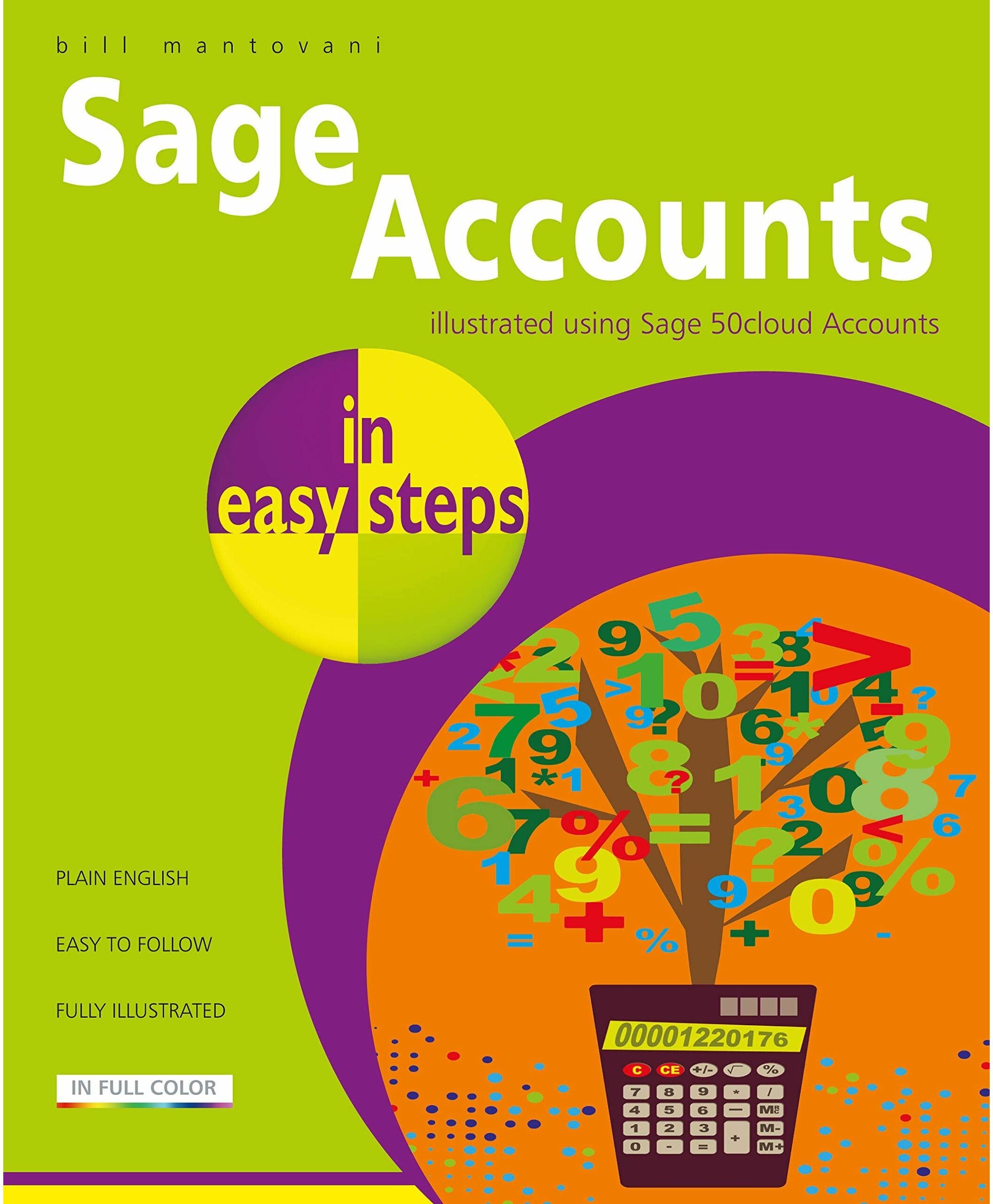
In Easy Steps Limited Sage Accounts in easy steps: illustrated using Sage 50cloud by Bill MantovaniSage Accounts is the UK's market-leading accounts software. It lets you manage your day-to-day finances, customers, suppliers and VAT and keeps your finger on the pulse of your business. Sage Accounts in easy steps uses detailed images and easy-to-follow instructions, showing you how to quickly get to grips with the new features of this leading accounts software. This definitive guide clarifies everything from basic recording keeping to utilising Sage as an information-bank for making crucial business decisions. Areas covered include: Setting up Sage, entering debtors and creditors Producing purchase/sales orders and invoices Bank account reconciliation Stock management, including Bill of Materials Important month and year end procedures Processing the VAT return and e-Submission Generating invaluable management reports Sage Accounts in easy steps is ideal for non-accountants using Sage for the first time, or just needing to grasp the new key features all in easy steps! Illustrated using Sage 50cloud Table of Contents Getting Started The Customer Ledger The Supplier Ledger The Nominal Ledger The Bank Products Invoices Processing Sales Orders Purchase Orders Financial Reporting Fixed Assets The Report Designer Opening Balances Data Management Task Management5,95 £*Shipping: 2,99 £Secure redirect to the provider
-
Uplifted Finds Vertical Toy Inventory Management Module grayOptimize your pets engagement ecosystem with the Vertical ToyInventory Module, a professionalgrade organization system engineered with spatialefficiency logic. This highutility module features a multitier felt architecture specifically designed to...92,97 $*Shipping: 0,00 $Secure redirect to the provider
-
Uplifted Finds Epidermal Sanitization Inventory (3 Pack Hub) Epidermal Sanitization Inventory (3 Pack Hub)Optimize your pets dermatological hygiene and ocular clarity with the Epidermal Sanitization Inventory, a professionalgrade maintenance system engineered with aqueouscleansing logic. This highutility 240unit logistics package features a specialized...111,97 $*Shipping: 0,00 $Secure redirect to the provider
-
Uplifted Finds Avian Mimic Enrichment Inventory (9 Unit Hub) Avian Mimic Enrichment Inventory (9 Unit Hub)Optimize your pet's physical agility and predatory tracking with the AvianMimic Enrichment Inventory, a professionalgrade interactive system engineered with highfrequency kinetic logic. This highutility 9piece replacement hub features a specialized...40,97 $*Shipping: 0,00 $Secure redirect to the provider
-
What are accounts in accounting?
In accounting, accounts are used to record and track the financial activities of a business. They are used to categorize and summarize the various transactions that occur within the business, such as sales, expenses, assets, and liabilities. Each account represents a specific aspect of the business's financial position and performance, and they are organized into a chart of accounts to provide a systematic way of recording and reporting financial information. Accounts are essential for preparing financial statements and analyzing the financial health of a business. **
-
Why do we reconcile accounts in accounting?
We reconcile accounts in accounting to ensure that the financial records are accurate and complete. By comparing the balances in the company's records with external sources such as bank statements or supplier invoices, we can identify and correct any discrepancies or errors. This process helps to maintain the integrity of the financial information and provides assurance that the company's financial statements reflect the true financial position. Additionally, reconciling accounts helps to detect and prevent fraud or unauthorized transactions. **
-
Gross or net amounts of inventory accounts?
When discussing inventory accounts, it is important to differentiate between gross and net amounts. Gross inventory refers to the total value of inventory without accounting for any deductions or adjustments. On the other hand, net inventory accounts for any deductions such as discounts, returns, or damaged goods, providing a more accurate representation of the actual value of inventory on hand. Both gross and net amounts of inventory accounts are essential for businesses to track and manage their inventory effectively. **
-
How does the accounting of personal accounts work?
Personal accounts in accounting refer to the accounts of individuals, such as customers, suppliers, and employees. The accounting of personal accounts involves recording all transactions related to these individuals, including purchases, sales, payments, and receipts. Each personal account is maintained separately in the general ledger, and all transactions are recorded under the respective account. This allows businesses to track the financial interactions with each individual and maintain accurate records for future reference and analysis. Additionally, personal accounts are used to prepare financial statements and reports, providing a clear picture of the business's financial relationships with its stakeholders. **
Similar search terms for Accounts
-
APC Network Management Card 3 Remote Management AdapterA plug-in remote management adapter for APC UPS systems with integrated PowerChute Network Shutdown and environmental monitoring capabilities. Supports network connectivity up to 1 Gbps across 10Base-T, 100Base-TX, and 1000Base-T Ethernet protocols using TCP/IP and SMTP. Designed for compatibility with multiple APC Smart-UPS and Symmetra models.577,99 £*Shipping: 0,00 £Secure redirect to the provider
-
Simon & Schuster Money: A Story of Humanity by David McWilliams Economic History & Global Finance ExplainedIn Money: A Story of Humanity, renowned economist David McWilliams explores the fascinating history of money — not just as currency, but as a powerful force that has shaped human civilisation, relationships, technology, and global society. From ancient barter systems to cryptocurrency revolutions, McWilliams reveals how money reflects our values, ambitions, fears, politics, and culture.Rich with storytelling, sharp insights, and humour, this book makes complex economic ideas accessible, engaging, and deeply human. Perfect for readers who enjoy exploring how history, psychology, markets, and power intersect, Money: A Story of Humanity provides a fresh, eye-opening look at how money drives — and is driven by — human behaviour. Ideal for fans of Yuval Noah Harari, Tim Harford, Niall Ferguson, and Mary Beard.7,99 £*Shipping: 2,99 £Secure redirect to the provider
-
Uplifted Finds Vertical Toy Inventory Management Module pinkOptimize your pets engagement ecosystem with the Vertical ToyInventory Module, a professionalgrade organization system engineered with spatialefficiency logic. This highutility module features a multitier felt architecture specifically designed to...92,97 $*Shipping: 0,00 $Secure redirect to the provider
-
Uplifted Finds Vertical Toy Inventory Management Module yellowOptimize your pets engagement ecosystem with the Vertical ToyInventory Module, a professionalgrade organization system engineered with spatialefficiency logic. This highutility module features a multitier felt architecture specifically designed to...92,97 $*Shipping: 0,00 $Secure redirect to the provider
-
How does the accounting of sub-accounts work?
Sub-accounts are used to track specific transactions within a larger account. For example, within a company's advertising expense account, there may be sub-accounts for online advertising, print advertising, and television advertising. Each sub-account allows for the tracking of expenses related to that specific type of advertising. When accounting for sub-accounts, transactions are recorded in the appropriate sub-account to accurately reflect the specific nature of the expense. This allows for better analysis and understanding of where funds are being allocated within the larger account. **
-
How can one automate accounts receivable accounting in Excel?
One can automate accounts receivable accounting in Excel by creating a template that includes formulas to calculate outstanding balances, aging reports, and customer payment histories. Utilizing Excel's built-in functions such as SUM, VLOOKUP, and IF statements can help automate the process of tracking and managing accounts receivable. Additionally, one can use macros and VBA (Visual Basic for Applications) to create automated processes for generating invoices, sending payment reminders, and updating customer records. By setting up these automated processes, one can save time and reduce the risk of errors in accounts receivable accounting. **
-
What are the expense and revenue accounts in accounting?
Expense accounts in accounting are used to record the costs incurred by a business in order to generate revenue. These can include items such as rent, utilities, wages, and supplies. Revenue accounts, on the other hand, are used to track the income generated by the business through its operations, such as sales revenue, service revenue, and interest income. Both expense and revenue accounts are essential for tracking the financial performance of a business and are used to calculate the net income or loss for a specific period. **
-
How is this task done with the inventory accounts?
This task is done with the inventory accounts by keeping track of the quantity and value of goods that a business holds for sale. The inventory accounts are updated regularly to reflect purchases, sales, and any adjustments such as returns or damaged goods. By accurately maintaining the inventory accounts, businesses can ensure they have the right amount of stock on hand to meet customer demand while also monitoring their costs and profitability. This helps in making informed decisions about pricing, ordering, and overall inventory management. **
* All prices are inclusive of VAT and, if applicable, plus shipping costs. The offer information is based on the details provided by the respective shop and is updated through automated processes. Real-time updates do not occur, so deviations can occur in individual cases. ** Note: Parts of this content were created by AI.